BGD One-Stop Perfume Sourcing for B2B Wholesale & B2C Retail. Premium Fragrances & Trusted Partners.

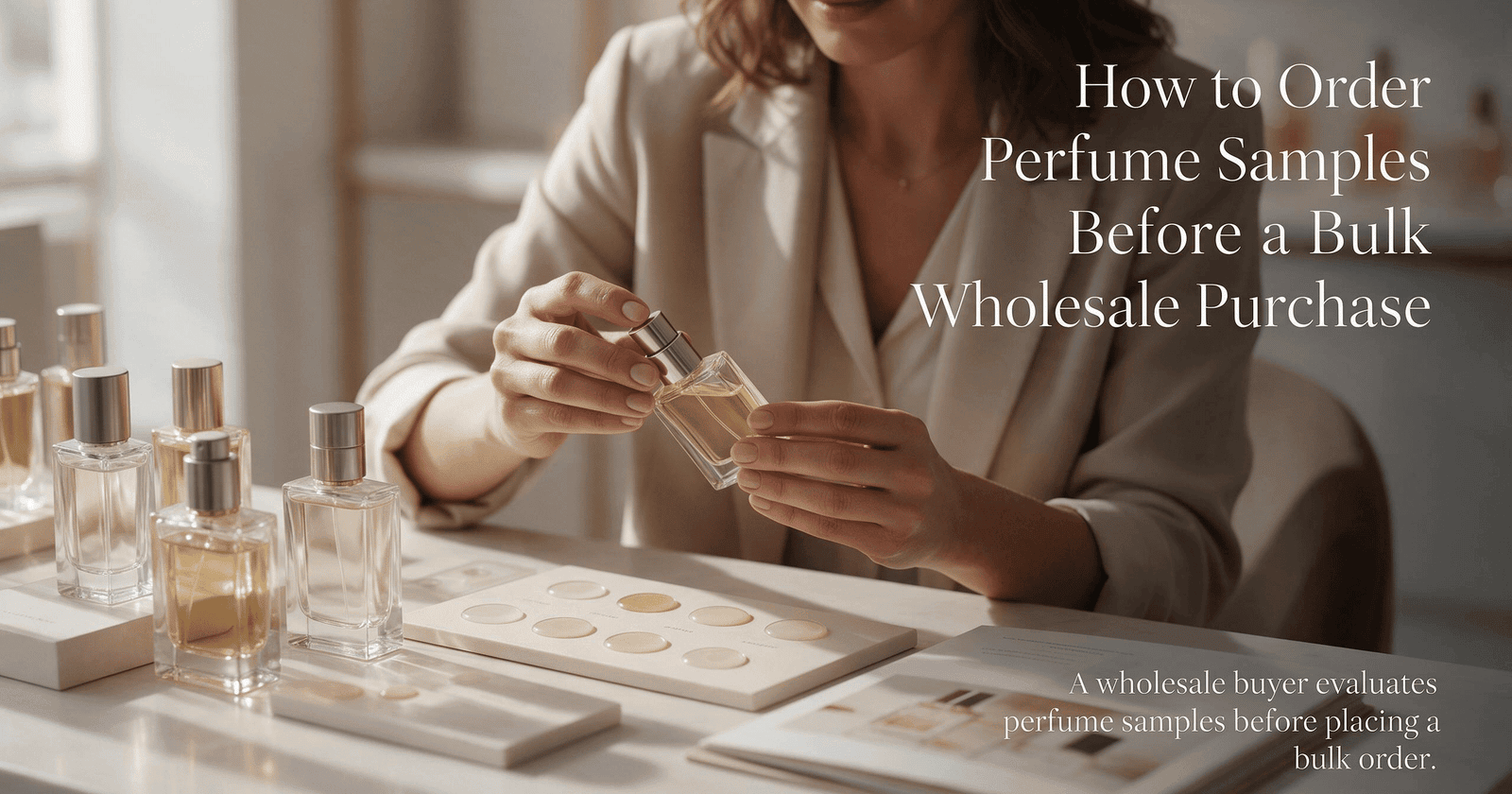
How to Order Perfume Samples Before Bulk Wholesale Purchase
Ordering perfume samples before a bulk wholesale purchase helps retailers evaluate fragrance quality, packaging, customer fit, and supplier performance before committing to larger inventory.

Ordering samples is one of the most useful steps between finding a wholesale perfume supplier and placing a larger order.
For retailers, distributors, and online fragrance sellers, samples provide something product photos and descriptions cannot: a chance to evaluate the actual product before committing inventory.
But sampling should not be treated as simply ordering a few bottles and deciding which ones smell good.
A well-planned sample order can help you compare fragrances, check presentation, understand customer response, and identify potential problems before they become an expensive inventory issue.
Why Order Perfume Samples Before a Bulk Purchase?
A fragrance can look promising online and still fail to meet your expectations once you receive it.
The scent may develop differently on skin. The bottle may feel less substantial than expected. The spray mechanism may not perform well. Packaging may not suit your retail environment.
There is also another issue that is easy to overlook: a fragrance can be good without being right for your customers.
This distinction matters for wholesale buyers.
The purpose of sampling is therefore not only to ask, “Do I like this perfume?”
A better question is:
“Does this product make sense for my customers, my sales channel, and my product range?”
That shift in perspective can make the sampling process much more useful, especially when you test wholesale perfumes before placing a bulk order.
Start With a Small, Deliberate Sample Selection
One common mistake is ordering too many samples at once.
When twenty or thirty fragrances arrive together, it can become difficult to remember the differences between them. Stronger fragrances can also affect how weaker or more delicate scents are perceived during the same testing session.
Instead, build a sample group with a purpose.
For example, a retailer might test:
- Several women’s fragrances
- Several men’s fragrances
- A few unisex options
- Different fragrance families
- A small selection of gift-oriented products
- A few products from a new category
The exact number depends on your business and the supplier’s sample options.
The important point is to make the sample order representative rather than excessive.
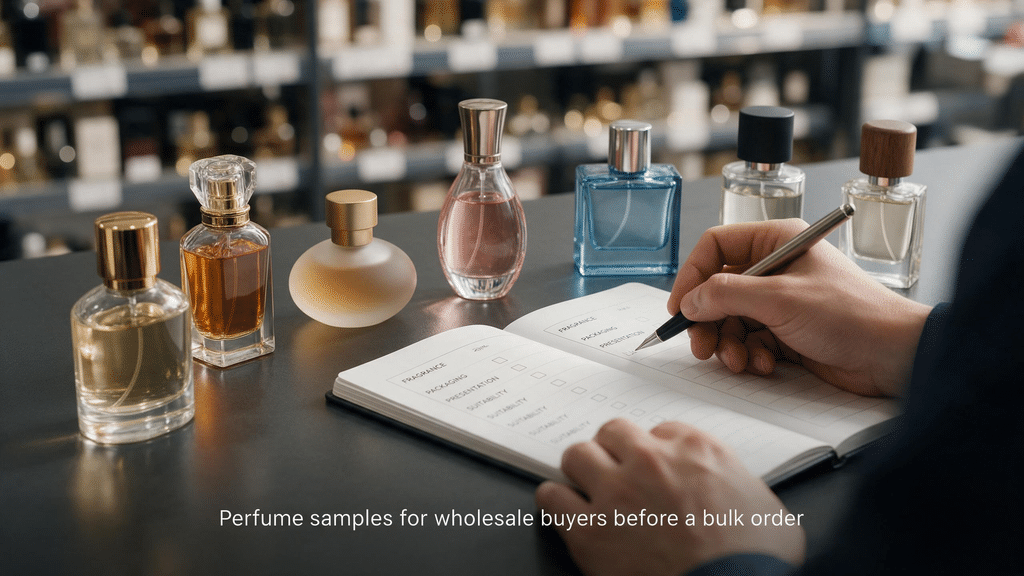
If you are entering the fragrance market for the first time, sampling should help you understand which product types deserve further attention—not fill your office with products that have never been evaluated properly.
What to Ask a Wholesale Perfume Supplier Before Ordering Samples
Before placing a sample order, clarify how the samples relate to the products you may eventually buy in bulk.
Useful questions include:
- Is the sample the same fragrance and formula as the regular product?
- Is the bottle the same as the standard wholesale version?
- Is the packaging representative of the bulk product?
- Can different fragrances be included in one sample order?
- What sample sizes are available?
- How long does sample preparation usually take?
- Are product specifications available for review?
- Can successful samples be included in a later wholesale purchasing plan?
You do not need to ask every question for every order.
Focus on the information that could affect your purchasing decision.
For example, if presentation is important because you sell through a physical boutique, packaging and bottle quality deserve more attention. If you mainly sell online, product photography, consistency, and customer feedback may carry more weight.
Do Not Test Every Sample in the Same Way
Perfume testing is more useful when it is done in stages.
Stage 1: Evaluate the first impression
Check the fragrance when first sprayed.
Consider:
- Does it match the expected fragrance profile?
- Is the opening pleasant and balanced?
- Does the scent feel appropriate for the intended customer?
- Is there anything noticeably different from the product description?
The first impression is useful, but it should not be the final decision.
Stage 2: Check the dry-down
A perfume can change significantly after the opening notes fade.
Give the fragrance time to develop and check it again later.
Look for:
- How the character changes
- Whether the fragrance remains pleasant
- Whether the base feels balanced
- Whether the overall development matches the intended positioning
This is particularly important when comparing several similar fragrances.
Stage 3: Evaluate performance
Depending on the product and positioning, consider longevity and overall wear experience.
Do not treat one person’s experience as a universal result.
Skin type, application amount, climate, and environment can all affect how a fragrance performs.
For wholesale buyers, the more useful approach is to identify whether the product performs within the expectations of its intended market.
Check the Product Beyond the Fragrance
Wholesale buyers sometimes focus so heavily on scent that they overlook the physical product.
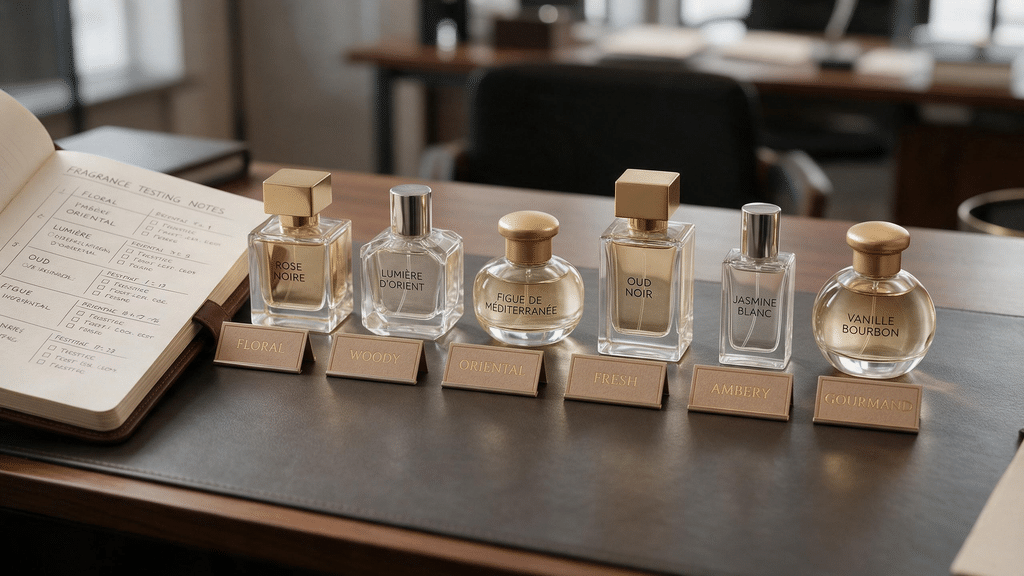
That can become a problem when the fragrance reaches the retail shelf.
During sampling, inspect:
Bottle quality
Look at the finish, weight, cap, labeling, and overall appearance.
Spray performance
Check whether the atomizer produces a consistent and comfortable spray.
Packaging
Look for presentation, printing quality, labeling, and general retail readiness.
Product consistency
If you receive multiple samples of the same product or several products from the same collection, compare them carefully.
Shipping condition
The sample order also gives you an early look at how products are packed and protected during transportation.
For a future wholesale shipment, this information can be just as useful as the fragrance itself.
Create a Simple Sample Evaluation Sheet
Memory is unreliable, especially when several fragrances are tested over multiple days.
A simple evaluation sheet can make purchasing decisions much clearer.
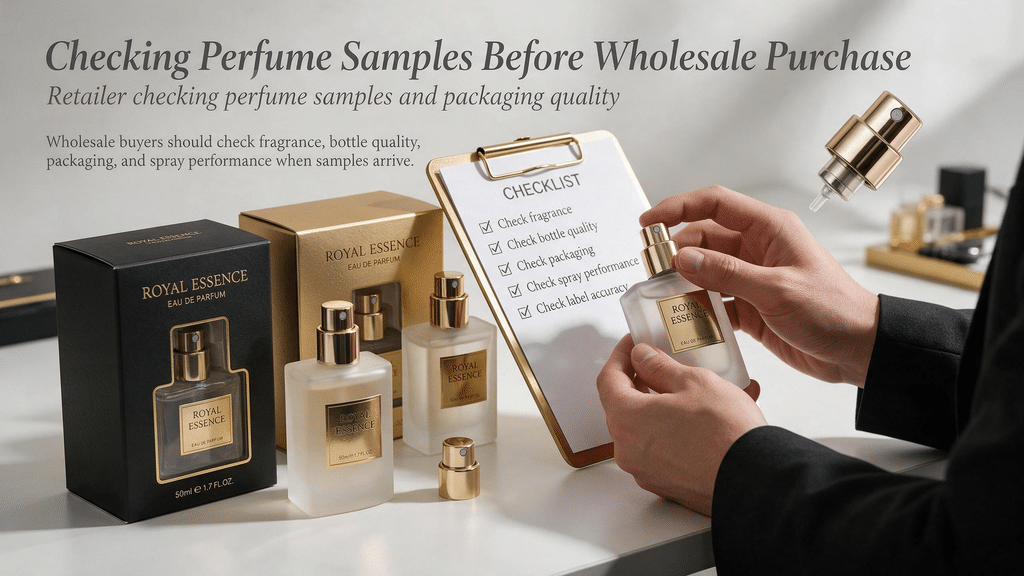
| Category | What to Record |
|---|---|
| Fragrance profile | Fresh, floral, woody, amber, gourmand, etc. |
| First impression | Initial reaction after spraying |
| Dry-down | How the scent develops |
| Performance | Overall wear experience |
| Bottle | Appearance and build quality |
| Packaging | Retail presentation |
| Target customer | Who the product may suit |
| Sales channel | Store, ecommerce, marketplace, gifting, etc. |
| Customer feedback | Comments from selected testers |
| Purchase decision | Consider, retest, or order |
You do not need a complicated scoring system.
In fact, a simple Keep / Retest / Drop system can sometimes be more practical for busy buyers.
The goal is to make your reasoning visible instead of relying on memory.
Test Samples Against Your Actual Market
This is where B2B sampling becomes different from personal perfume shopping.
A buyer may personally love a fragrance but still decide not to stock it.
Why?
Because personal preference and commercial suitability are not the same thing.
If you operate a boutique, ask selected staff or trusted customers for feedback.
If you sell online, consider whether the fragrance fits the customers you already attract.
Think about questions such as:
- Would this product make sense beside my existing range?
- Does it fill a gap in my current selection?
- Is the fragrance style already overrepresented?
- Could it appeal to a different customer segment?
- Does the packaging work for gifting?
- Can I explain the product clearly on an ecommerce page?
This approach turns sampling into a small market research exercise.
Look for Product Gaps, Not Just Individual Winners
Another useful B2B purchasing principle is to evaluate the whole assortment.
Imagine that five samples perform well, but all five are similar floral fragrances.
Ordering all five may create unnecessary overlap.
Instead, look at what your current range is missing.
For example, a balanced assortment might include different fragrance directions, customer profiles, and occasions.
The question becomes:
“Which products improve my assortment?”
rather than:
“Which products are individually attractive?”
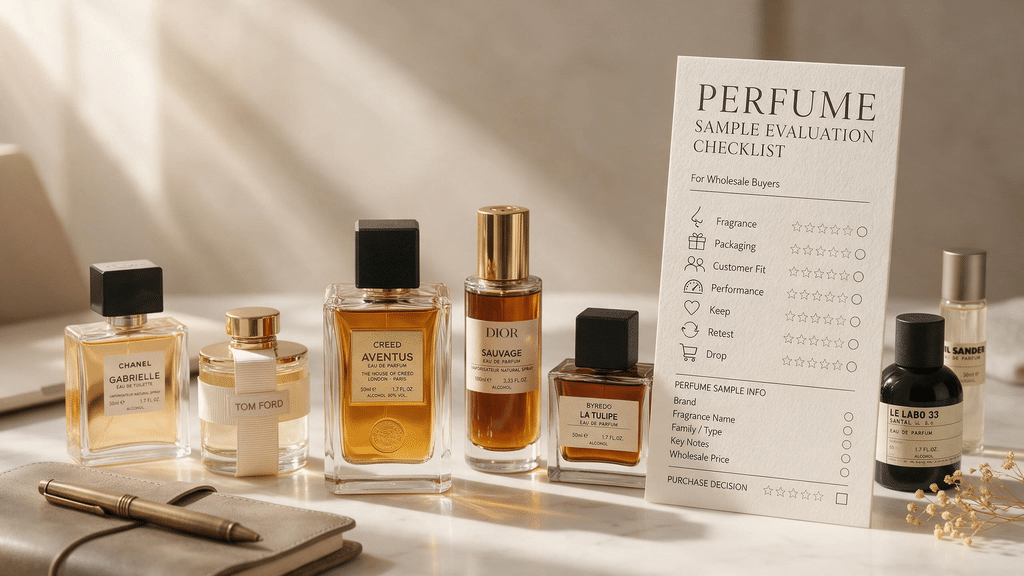
This is especially important for smaller retailers with limited shelf space or inventory budgets.
When Should You Move From Samples to a Bulk Order?
There is no universal number of days or samples that guarantees a good purchasing decision.
Instead, move forward when the important questions have been answered.
Before placing a bulk wholesale order, you should have a reasonable understanding of:
- The actual fragrance
- Product presentation
- Target customer
- Expected sales channel
- Supplier communication
- Packaging and shipping condition
- Which products complement your existing assortment
If several important questions are still unclear, another round of testing may be more useful than increasing the order quantity.
On the other hand, endless testing can also delay a business unnecessarily.
Once the key uncertainties have been reduced and the products fit your assortment, the next step is to plan the initial wholesale order carefully.
Keep Your First Bulk Order Focused
A successful sample test does not mean every tested product needs to be ordered in large quantities.
For a new retailer, a focused first order can make inventory management easier, especially when planning your first wholesale perfume order.
Prioritize products that:
- Fit your target customer
- Add something new to your assortment
- Have acceptable presentation
- Received useful tester feedback
- Make sense for your sales channel
Then monitor what happens after the products reach the market.
The first wholesale order should generate new information.
Which products attract attention?
Which ones receive repeat purchases?
Which fragrances generate questions but few orders?
Which products sell mainly as gifts?
These observations can guide the next purchasing cycle more effectively than simply ordering more of everything that initially smelled appealing.
Use Samples to Evaluate the Supplier, Too
There is one final point that wholesale buyers should not overlook.
The sample process is also a small test of the supplier.
Pay attention to how the supplier handles questions, product information, packing, communication, and follow-up.
A sample order cannot prove how a supplier will handle every future wholesale shipment. However, it can provide useful early information about the purchasing experience.
That makes sampling valuable on two levels:
You are testing the products, and you are learning how the supplier works.
How BGD Fits Into the Sampling and Wholesale Process
For buyers using the BGD Wholesale & Retail Platform, sampling can be part of a more structured wholesale purchasing process.
Rather than selecting products based only on online images or fragrance descriptions, buyers can use sample testing to compare fragrance styles, product presentation, and suitability for their own customer base.
After testing, successful products can become part of a broader BGD wholesale perfume collection, covering women’s fragrances, men’s fragrances, unisex fragrances, gift sets, and other fragrance categories.
This approach gives buyers more flexibility when building an assortment instead of treating the first bulk order as a final decision.
Final Thoughts
Ordering perfume samples before a bulk wholesale purchase is not simply a way to smell products before buying them.
It is a practical risk-control step.
A good sample process helps you evaluate the fragrance, packaging, physical product, customer fit, assortment balance, and supplier experience before committing more inventory.
The most useful question is not:
“Which perfume do I like best?”
It is:
“Which products have a clear place in my business?”
That mindset can turn a small sample order into a much more informed wholesale purchasing decision.