BGD One-Stop Perfume Sourcing for B2B Wholesale & B2C Retail. Premium Fragrances & Trusted Partners.

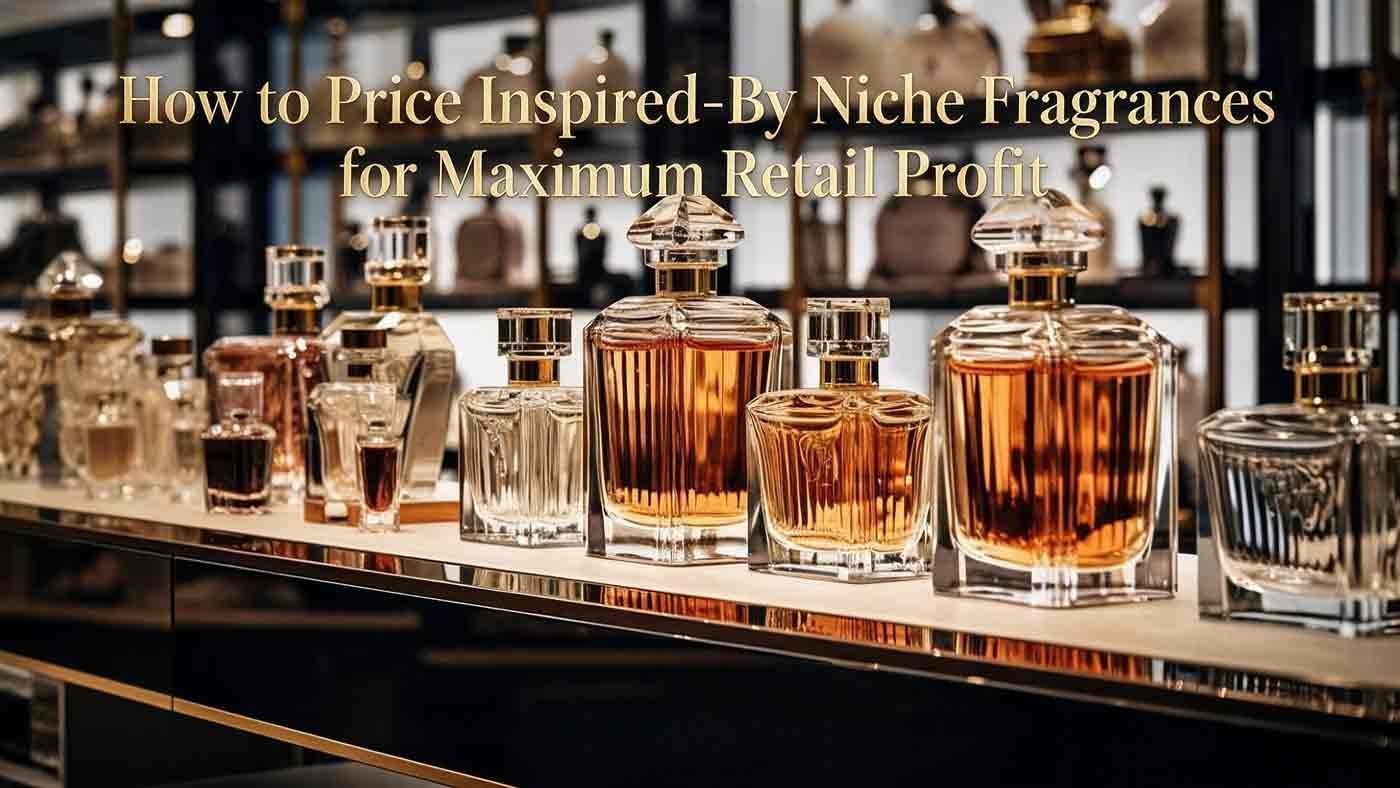
How to Price Inspired-By Niche Fragrances for Maximum Retail Profit
Setting the right retail price for inspired-by fragrances takes more than doubling the wholesale cost. Learn how to calculate landed costs, compare margins, plan discounts and price products for a profitable independent fragrance store.

Buying perfume at wholesale prices is one thing. Turning that stock into a profitable retail business is another.
For independent perfume stores, boutique owners and online sellers, inspired-by niche fragrances can be an attractive addition to a product range. They give customers an accessible way to explore different scent styles without paying luxury fragrance prices.
But a low wholesale price does not automatically mean a good profit. Shipping, packaging, payment fees, advertising and discounts can quickly reduce what you earn from each bottle.
If you are pricing inspired-by perfume bought wholesale, the goal is not simply to mark up every bottle by the same percentage. You need a retail price that covers your costs, fits your customers’ budgets and leaves enough room for your business to grow.
1. Start With the Real Cost of Each Bottle
One of the easiest mistakes is using the supplier’s unit price as the total product cost.

Imagine you purchase 100 bottles at $6 each. Your product invoice comes to $600. However, once the shipment arrives, you may also have paid for freight, handling, import duties where applicable, and other receiving expenses.
These costs need to be included before you decide what to charge customers.
For example:
| Cost item | Total cost |
|---|---|
| 100 perfume bottles | $600 |
| Inbound shipping and handling | $150 |
| Other allocated receiving costs | $50 |
| Total landed cost | $800 |
| Landed cost per bottle | $8 |
This means each sellable bottle costs you $8 before you pay for order fulfilment, advertising or other retail expenses.
For mixed wholesale orders, freight may not always be best allocated equally. A heavier gift set and a standard perfume bottle can occupy different amounts of space or contribute differently to shipping charges. Choose a reasonable allocation method and use it consistently.
For a more detailed explanation, see ScentSource Global’s guide to wholesale perfume profit margins and landed cost.
The main point is simple: calculate your cost from the stock you can actually sell, not just the price on the supplier’s quotation.
2. Understand the Difference Between Markup and Gross Margin
Once you know your landed cost, you can work out possible retail prices.
However, markup and gross margin are not the same thing. This distinction matters when you are comparing pricing strategies or planning discounts.
- Markup measures the difference between selling price and cost as a percentage of cost.
- Gross margin measures gross profit as a percentage of the selling price.
Using the $8 landed cost from our example, here is how different retail prices compare.
| Retail price | Gross profit per bottle | Gross margin |
|---|---|---|
| $16 | $8 | 50% |
| $20 | $12 | 60% |
| $24 | $16 | 66.7% |
| $28 | $20 | 71.4% |
These figures are before selling expenses, such as payment fees, advertising and outbound shipping subsidies.
At a $24 retail price, for example, you earn $16 in gross profit before those expenses. That is a 66.7% gross margin, not a 200% profit margin.
The difference is important because a product can appear highly profitable when you look only at its markup, while the actual return is much lower after selling costs.
For additional background on wholesale pricing formulas and retail margins, refer to Shopify’s guide to calculating wholesale product pricing.
3. Do Not Price Every Fragrance the Same Way
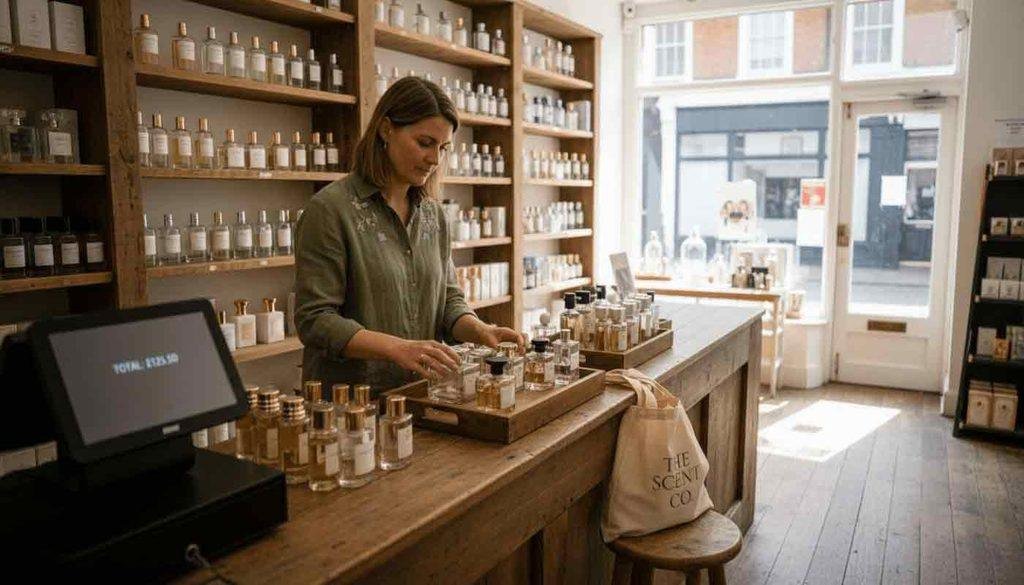
A flat markup may be convenient when managing a large catalogue, but different fragrances can appeal to different customers.
A fresh everyday scent, a rich woody fragrance and a gift-ready perfume set do not necessarily serve the same purpose in your store.
Everyday fragrances
Fresh citrus, clean musk and easy-to-wear floral scents can appeal to shoppers looking for something affordable for regular use. Competitive pricing and consistent availability may matter more here than elaborate packaging.
Distinctive niche-inspired scents
Woody, spicy, amber and complex floral profiles may appeal to shoppers looking for something with more character. If the scent quality, presentation and customer experience support it, these products may justify a higher price than your everyday range.
Still, do not charge more simply because a product is described as niche. Customers need a reason to see the added value.
Gift sets and presentation-focused products
Gift sets offer another pricing opportunity because customers are buying the presentation as well as the fragrance. Packaging, bottle design and the convenience of a ready-to-give product all contribute to perceived value.
Before setting the price, include the cost of the complete set, including its box, inserts and any additional packaging.
A well-organised assortment gives customers clear choices without forcing every product into the same price bracket.
4. Check What Customers Are Actually Willing to Pay

Your costs tell you what you need to earn. Your market helps you determine what customers are likely to pay.
Before listing a fragrance, look at comparable products in your target market. Pay attention to bottle size, concentration, packaging quality, scent positioning and customer reviews.
A 100ml eau de parfum in a gift-ready box is not necessarily comparable to a smaller bottle with basic packaging.
It is also worth considering the total amount customers pay at checkout. A $19.99 fragrance may look affordable on the product page, but an unexpected shipping charge can make the order less attractive.
Rather than guessing, test a few price points with a small quantity of stock. Track product-page visits, add-to-cart activity, completed orders and customer feedback.
If a product attracts attention but rarely converts, price may be one issue. However, product descriptions, shipping costs and customer trust can also affect the result.
Avoid cutting prices immediately whenever sales slow down. First, work out what is stopping customers from buying.
5. Leave Room for Discounts Without Destroying Your Margin
Discounts can help independent fragrance stores attract first-time buyers, encourage larger orders or clear slow-moving inventory. Problems arise when the original price leaves too little room for promotions.
Return to our example of a fragrance with an $8 landed cost.
Suppose you list it at $24 and offer a 15% discount during a seasonal campaign. The customer pays $20.40 before shipping and taxes.
Your gross profit before selling expenses becomes $12.40 per bottle, giving you a gross margin of approximately 60.8%.
That may still be workable. However, if you also absorb delivery costs, pay for advertising and cover transaction fees, the remaining contribution will be lower.
Before launching a promotion, ask yourself:
- How much will I actually receive after the discount?
- What variable costs will come out of that amount?
- Will the promotion bring in profitable orders, or simply sell more bottles at a lower return?
You do not need to discount everything. A limited offer on selected fragrances, a gift-with-purchase promotion or a carefully calculated bundle may be more useful than reducing prices across your entire catalogue.
6. Online Stores Need to Calculate Profit Beyond the Bottle
A physical boutique and an independent ecommerce store may sell the same fragrance at the same price but earn different amounts from each sale.
Online sellers often need to account for payment processing, advertising, website expenses, fulfilment materials and shipping offers. Customer acquisition can be especially important for stores that are still building their audience.
Consider a fragrance sold online for $24:
| Item | Amount |
|---|---|
| Selling price | $24.00 |
| Landed product cost | $8.00 |
| Payment fee (illustrative) | $0.90 |
| Packaging and fulfilment | $1.50 |
| Shipping subsidy | $3.00 |
| Advertising cost allocated to the order | $4.00 |
| Remaining contribution | $6.60 |
In this example, $6.60 remains before fixed overheads and any other unlisted expenses. The figures are illustrative; your actual costs will depend on your sales channel and fulfilment arrangements.
This is why a product with a 66.7% gross margin does not necessarily deliver a 66.7% net profit.
If you sell through your own website, review the numbers at the order level as well as the product level. One customer may buy a single bottle, while another may purchase three fragrances in one order. The second order could spread some fulfilment and acquisition costs across more units.
That is one reason why sensible bundles and multi-item offers can be useful, provided the discount does not erase the extra profit.
7. Test Before You Commit to a Large Wholesale Order
A fragrance can look promising in a supplier catalogue and still perform differently with your customers.
Scent preferences are personal. Some shoppers prefer fresh and clean fragrances, while others look for sweet, woody, spicy or deeper amber profiles. Packaging and longevity expectations can also influence repeat purchases.
Before placing a large order, consider testing a mixed selection.
Start with a manageable number of fragrances across different scent families. Evaluate how each one develops on skin, how long it remains noticeable, how the packaging looks in person and what customers say after trying it.
Then compare the results with your sales data.
Which scents receive the most interest? Which ones convert into purchases? Which products generate repeat orders? Are customers comfortable with the price, or do they regularly wait for discounts?
These observations help you decide where to invest more money. They also reduce the risk of tying up working capital in products that look good on paper but move slowly in practice.
For new retailers, a smaller tested assortment is often more useful than a large catalogue purchased without a clear sales plan.
8. Build a Pricing Structure That Can Grow With Your Business
As your fragrance business develops, pricing should become a repeatable process rather than a decision made separately for every new product.
Keep a simple record of the following for each SKU:
- Wholesale unit cost and order quantity.
- Landed cost per sellable bottle.
- Regular retail price and promotional price.
- Gross margin at each selling price.
- Variable selling costs and contribution per order.
- Sales volume, stock levels and reorder frequency.
Review the numbers regularly. If freight costs change, a supplier offers a different quantity tier or a fragrance becomes a consistent bestseller, you may need to adjust your pricing or purchasing plan.
Wholesale quantity discounts can improve unit economics, but only when you can sell the additional inventory at a reasonable pace. Paying less per bottle is not a win if the extra stock sits in storage for months.
For independent retailers, the aim is to balance three things: a price customers accept, a margin that supports the business and an inventory level that does not put unnecessary pressure on cash flow.
Before You Place Your Next Wholesale Order
If you are comparing fragrance suppliers, review the assortment, packaging options, order quantities and shipping arrangements together. A low unit price is useful, but the complete purchasing cost and the suitability of the products for your customers matter just as much.
You can explore the BGD wholesale perfume collection to compare fragrance options for different retail needs, from everyday scents to more distinctive profiles and gift selections. Before committing to a larger quantity, choose products that fit your target market and test them where possible.
For retailers who want to build a sustainable fragrance business, the best pricing strategy is rarely about charging the highest possible amount. It is about knowing your numbers, understanding your customers and choosing products that can sell consistently at a price that makes sense for both sides.
Frequently Asked Questions
How do I price inspired-by perfume bought wholesale?
Start with the landed cost per sellable bottle, including the product price, inbound shipping and applicable import expenses. Then account for selling fees, fulfilment, marketing and expected discounts. Finally, compare your planned price with similar products in your target market.
What is a good profit margin for wholesale fragrance resale?
There is no universal margin that works for every fragrance business. The right target depends on your sourcing cost, retail price, sales channel, customer acquisition costs and inventory turnover. Calculate gross margin first, then estimate the contribution remaining after variable selling expenses.
Should I offer discounts on inspired-by niche fragrances?
Discounts can encourage trial purchases and increase basket size, but they should be based on your actual costs. Test selected promotions and measure the contribution they generate instead of assuming that more sales always mean more profit.
Is buying more perfume at wholesale always cheaper in the long run?
A larger order may reduce the unit purchase cost, depending on the supplier’s pricing tiers. However, extra shipping, storage, slow-moving stock and cash tied up in inventory can offset those savings. Compare the total cost and expected sell-through before increasing order quantities.