BGD One-Stop Perfume Sourcing for B2B Wholesale & B2C Retail. Premium Fragrances & Trusted Partners.


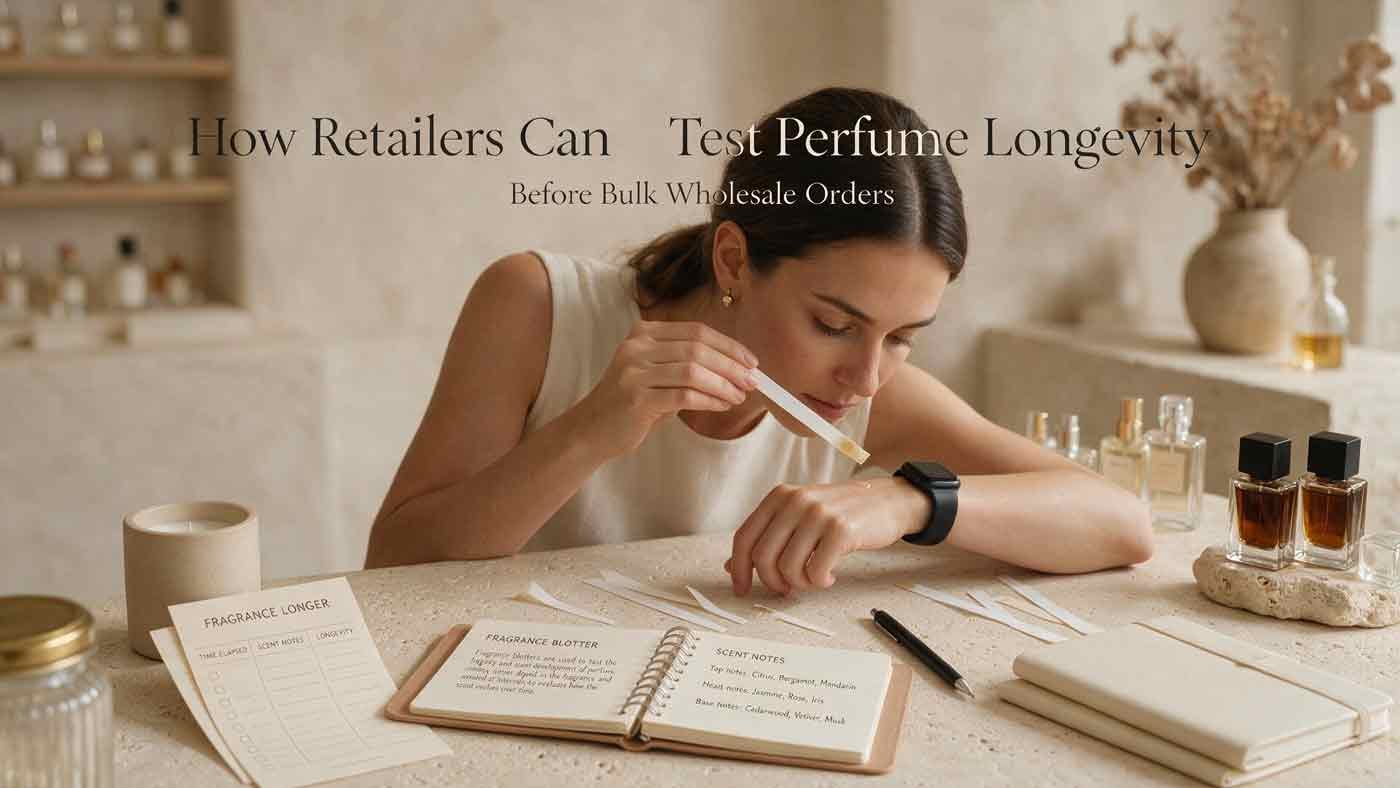
How Retailers Can Test Perfume Longevity Before Bulk Wholesale Orders
Learn how retailers can test inspired-by perfume samples on skin, blotter strips, and fabric to check longevity, sillage, and dry-down before placing a bulk wholesale order.


When sourcing inspired-by fragrances for a retail store, the first spray can be misleading.
A perfume may smell very good on a blotter strip, but become much softer once it is on skin. Another fragrance may have a simple opening but develop into a pleasant dry-down that lasts for hours.
For retailers, this is worth checking before placing a larger wholesale order.
You do not need special equipment or a complicated testing process. With a few simple tests, you can get a much better idea of how a perfume performs over time and whether it fits your customers.
Why Test Perfume Longevity Before a Wholesale Order?
A fragrance should not be judged only by its opening.
Retail customers experience the perfume over several hours, so it helps to know what happens after the first 10 or 20 minutes.
Two things are especially useful to check:
- Longevity — how long the fragrance remains noticeable on the skin.
- Sillage — how much the scent projects around the wearer.
They are different.
A perfume can last for many hours but stay close to the skin. Another may project strongly at first and become softer later.
Neither result tells you everything on its own. What matters is whether the overall performance makes sense for the fragrance and the customers you are selling to.
What You Need for the Test
You do not need special equipment to test perfume longevity. A few simple items are enough:
- Perfume blotter strips
- Clean, unscented skin
- A small piece of clean cotton fabric
- Pen and notebook, or a simple spreadsheet
- Your phone for checking the time
If you have not ordered samples yet, it is worth starting with a small sample order before testing different fragrances for your store.
Try to keep your testing conditions similar when comparing samples.
Use roughly the same number of sprays and avoid testing over scented lotion, body oil, or another perfume.
The goal is not to create a laboratory test. It is simply to make your comparisons more consistent.
Start With a Blotter Strip
Blotter strips are useful when you are comparing several samples.

Spray the perfume once onto a clean strip and write the fragrance name on it. Then check it at different times instead of smelling it only immediately after spraying.
A simple schedule could be:
Immediately → 15 minutes → 1 hour → 3 hours → 6 hours
Pay attention to how the fragrance changes.
Does the opening settle nicely? Does the main scent remain clear? What does the dry-down smell like after several hours?
This test is useful because it gives you a clean way to compare samples without differences in skin chemistry.
However, a blotter cannot replace a skin test.
Test the Perfume on Skin
For retailers, this is usually the most useful part of the test.
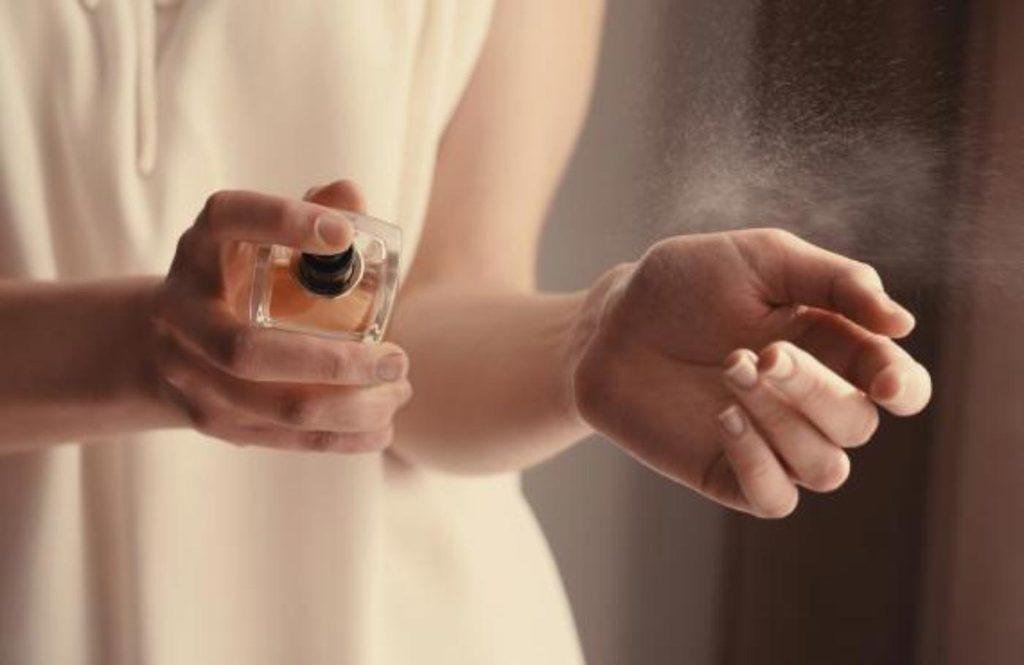
Wash your wrist or inner arm with unscented soap and let it dry completely. Apply the same amount of perfume you use for your other samples.
Do not rub the fragrance into the skin. Let it dry naturally.
Then check it at a few points during the day:
- 15 minutes: See how the opening settles.
- 2 hours: Check the main character of the fragrance.
- 4–6 hours: Pay attention to the dry-down.
- Later in the day: See whether any noticeable scent remains.
You can keep your notes simple.
For example:
5 — Strong
3 — Noticeable
1 — Very faint
These numbers are not scientific measurements. They are just a practical way to compare several samples without relying entirely on memory.
Pay Attention to the Dry-Down
The dry-down is easy to overlook when testing samples.
A fragrance can make a strong first impression and then become less interesting after an hour. The opposite can happen too.
Some scents become smoother and more comfortable as the top notes disappear.

When checking the dry-down, ask yourself:
- Does the fragrance still smell pleasant?
- Is it still recognizable?
- Does the scent feel balanced?
- Would it suit the customers I sell to?
- Is the remaining scent too weak, or is it appropriate for this type of fragrance?
This is often more useful than simply asking, “How many hours does it last?”
Check Sillage Separately
Longevity and sillage should not be treated as the same thing.
After applying the perfume, notice how easily you can smell it without putting your nose directly against your skin.
You can also ask someone nearby whether they can notice the fragrance naturally.
This gives you a rough idea of projection.
Keep in mind that strong projection is not always necessary. A light everyday fragrance may naturally sit closer to the skin, while a richer evening scent may have a stronger presence.
The important thing for a retailer is knowing what to expect from the product.
A Quick Fabric Test
You can also try the sample on a small piece of clean cotton fabric.
Spray once and leave it somewhere cool and away from direct sunlight. Check it after several hours and again later if useful.
Fabric can hold fragrance differently from skin, so this should be treated as an additional comparison rather than a replacement for the skin test.
It can still be helpful when your customers commonly apply perfume to clothing.
Keep the Testing Conditions Consistent
Perfume performance can change depending on the situation.
Skin type, weather, humidity, temperature, fragrance concentration, and application can all make a difference.
For example, perfume may seem to develop differently on dry skin compared with more moisturized skin. Hot and humid conditions can also change how quickly the scent develops.
This is why comparing samples under similar conditions is more useful than trying to find one universal number of hours for every perfume.
What Should Make You Test a Sample Again?
Some results deserve a second test before you make a bulk purchasing decision.
For example:
- The fragrance becomes almost undetectable very quickly on skin.
- The dry-down smells noticeably different in an unpleasant way.
- A strong alcohol smell remains after the opening has settled.
- The fragrance becomes sharp, sour, or chemically unpleasant.
- The projection is much weaker than expected for that fragrance style.
One unusual result does not automatically mean the product is unsuitable.
If the fragrance otherwise fits your product range, test it again under similar conditions before making a final decision.
Compare Samples Before Choosing Your Wholesale Products
If you are testing several fragrances, avoid choosing one simply because it smells strongest in the first 15 minutes.
Look at the complete picture.
For each sample, consider:
- Opening
- Scent development
- Longevity
- Sillage
- Dry-down
- Packaging
- Spray quality
- Fit with your target customers
This gives you a more realistic idea of which products deserve a place in your wholesale assortment.
Before You Place the Bulk Order
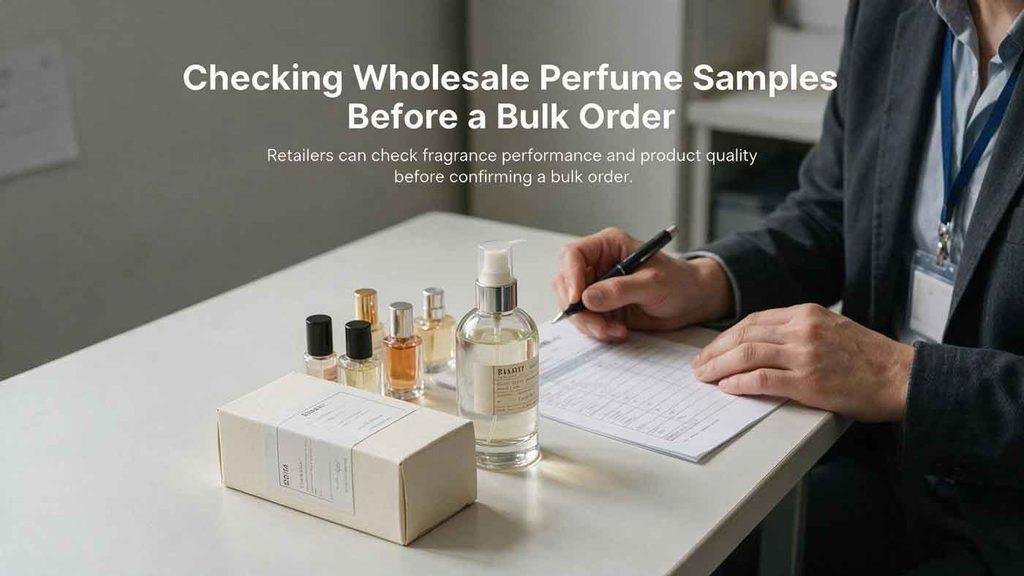
Once the fragrance testing is finished, there are still a few practical details to check.
Make sure the supplier understands which sample you approved and confirm that the bulk batch is expected to match the approved sample.
It is also worth checking the bottle, spray nozzle, packaging, labeling, MOQ, and wholesale terms before confirming the order.
The fragrance itself is important, but it is only one part of the product you are putting on your shelves.
Final Thoughts
Once the fragrance testing is finished, there are still a few practical details to check.
If you are ready to compare different fragrance options for your store, you can also explore the BGD wholesale perfume collection to review different fragrance styles and wholesale products.
Make sure the supplier understands which sample you approved and confirm that the bulk batch is expected to match the approved sample.
It is also worth checking the bottle, spray nozzle, packaging, labeling, MOQ, and wholesale terms before confirming the order.
The fragrance itself is important, but it is only one part of the product you are putting on your shelves.